Category Archives: BA Basics

Mente does the Buenos Aires Pub Crawl!

Buenos Aires is known for its thrilling and eccentric nightlife, but it can be overwhelming.  Which are the cool bars to go to?  If I go out at midnight, am I too early?  3 am, too late?  And what better way of getting a little preview than by going on the Buenos Aires Pub Crawl. Mente invites its Mente participants that are here in Buenos Aires– studying Spanish, interning or volunteering– to experience the Buenos Aires Pub Crawl at least once a month.

Friday, a group of ‘buena onda’ Mente participants got the Cliff Notes to going out with the Buenos Aires Pub Crawl.  We met up at the first bar, Kuantam on El Salvador in Palermo Hollywood. At this first bar we received free all you can eat pizza, beer and wine and warmed up for the rest of the night. It was a great opportunity for Mente amigos to meet other participants and also to loosen up and get to know others even more!

Some Mente participants!

Enjoying free drinks at Bar #1

After the meet-and-greet at the first bar, we moved on to the next two bars, where we received a friendly welcome shooter. In each bar, there were great discounted drinks only for Buenos Aires Pub Crawl participants.

After the last bar, we all got ready to head to the boliche (club), Crobar! Crobar is known for being a hip and popular club that is always packed on a Friday night. We arrived at Crobar at around 2am by private bus organised by the Buenos Aires Pub Crawl and skipped the queue to enter FREE!

A good time was had by all.

Mente amigos pulled out some groovy moves on the dance floor that night! We had a load of fun dancing till the wee hours of the morning and finishing off the night with a famous, greasy choripan.

Dancing at Crobar

Thanks again to all our friends at the Buenos Aires Pub Crawl! They did a great job of making sure we had a fantastic time.

Andrea and Patricia

Day in the Life: Mente Participant Simon

Some real, live Mente participants. We just happen to attract naturally beautiful people.

Sure, we’ve all heard stories about studying abroad; but what is it really like?  We were curious ourselves to see what an actual, on-the-ground day in the life involves, so we decided to tag along with some of our participants over the next few months to get a picture of the real Mente Argentina experience.

View from Simon's apartment overlooking the Botanical Gardens

So meet Simon, a participant from Hong Kong. He came to Argentina on vacation to study bartending and wine; not a bad life.  A typical day?  Waking up in a shared apartment on Las Heras, across from the botanical gardens in the heart of Palermo.  Breakfast might be medialunas and mate, an acquired taste, to be sure—but what doesn’t go with medialunas?  It has to be a quick breakfast; at 8 am Simon heads to Spanish class on Calle Florida.

Medialunas and mate outside Recoleta Cementery

Verbs can be fun.  Honest.  At the intensive Spanish class there are only a few students– never more than 8 per class– and each week, the class advances to a new level.  Professors are experienced Argentinians– perfect for adopting the lisp and other peculiarities of speech to make one an authentic porteno.  It’s a four hour class but there’s a break in between; just enough time to grab a quick coffee and chat with the other students, or get insider tips on life in Buenos Aires from the professor.

Nothing caps off a morning of imperfect Spanish verbs like mixing a few drinks.  For the first two weeks of his four week program, Simon is participating in the Barman course, a Mente program which will certify him to bartend internationally.

Definitely a place that inspires learning....

Just a few of the Barman course's school supplies.


Each day involves learning how to mix drinks, flip bottles in the air, and pour the perfect drink.

At the end of the program, Simon creates his own, signature cocktail: a Ginger Honey Martini.  We could definitely get used to drinking that!

Final Exam: A+

After a tough day of language-learning in the morning and drink-creating– and tasting– in the afternoon, a night out is in order.  Maybe it’s cooking at home, going out in Palermo, or doing a Mente night out– like a group outing to a show like Hombre Vertiente, or bar-hopping with the other participants–whatever it is, there better be time for sleep; tomorrow’s a new day!

Stay tuned for our next post on a real, live, Mente Argentina participant!

Simon with his Barman classmates

Mente participants out on the town


Patricia

Malbec World Day– TODAY!

Malbec, Argentina's national grape

Today marks the second-annual Malbec World Day!  Although you can find Malbec wines made outside of Argentina, in the past century it has become known as Argentina’s national grape.  First introduced by President Domingo Sarmiento in the 1850s, Argentina’s Malbec production soon outstripped France’s, and following a plague in French vineyards in the late 1800s, Argentina became the only country to grow French-heritage Malbec wines.   It has since become a truly Argentine wine.   The dry, high altitude climate available on the edge of the Andes mountains in Mendoza and other wine-making regions, along with these unique grapes, make Argentina one of the world’s premier wine tourism destinations.

Out at Mente Argentina's Wine Tasting Night

Here at Mente, we’ve always been big fans of wine; hence our fantastic wine program.  Students choose between group classes, individual lessons, or a combination of both in order to taste and learn about the differences between more than 50 types of wine.  Experienced wine professionals offer insights into the best food and wine pairings… knowledge which always comes in helpful at dinner parties.

Learning about various Argentine wines from the expert himself.


So grill a steak, uncork a bottle, and celebrate the rich, deep, and ultimately delicious heritage of Argentina.  To the Malbec… cheers!


 Patricia

Mente’s Inside Information for an Amazing Semester Abroad!

obelisco

So you’ve just signed up for a Semester abroad in Buenos Aires. Now what? Here at Mente we are experts on study abroad and we are going to share our knowledge on the must-knows, must-dos and must-sees of studying abroad in Argentina.

First off, the must-knows about going abroad. Before you leave it is important to do some research on basic things such as the climate, history, and little cultural anecdotes which will make your transition that much easier upon arrival. One such anecdote here in Buenos Aires is the use of vos and the pronunciation of ‘ll’ and ‘y’. I’m not going to lie, I studied Spanish for years before setting foot in Argentina, and I did not understand anything when I got here. What the is maawshow? (Mayo, for those you who also aren’t familiar with el castellano porteño).
In terms of Argentine history, it is interesting and extensive with periods of greatness followed by long periods of pure devastation. Argentines tend to be very strong individuals who have lived through difficult times but still maintain a positive outlook. They are some of the most generous people in the world and are always willing to help their neighbor. The difficult times here have definitely bred a strong sense of community, which is evident throughout the country.
Finally, the climate. This is super important because here in Argentina we are in the Southern Hemisphere, meaning the seasons are the exact opposite of those in the US and Europe. We have a relatively mild winter from June to September, an absolutely beautiful spring in October, November and December. Then in January and February it is HOT. Hot and humid, which is precisely the reason most porteños ditch the city and head to the beach! This scorching summer is followed by a pleasant fall with varied temperatures and scattered thunderstorms. Knowing what months (or maybe you will be staying the whole year) you will be here is vital to your packing. A friend of mine who studied abroad TWICE during undergrad said, “study abroad is all about what to pack”. It might seem trivial, but you will undoubtedly be a couple of weeks into your trip and wish you had brought that shirt, those shoes, even that jar of peanut butter that you thought would take up too much space in your suitcase. Trust me, they don’t know how to do peanut butter here. Also, you will most likely be on a budget which won’t allow for purchasing overpriced goods here in Buenos Aires, so just pack it if you even for one second think you will want it.

Must-dos. Buenos Aires is FULL of must-dos, so I’m just going to lay out some basics but I recommend doing some research and making a local friend! The very first thing you must do is learn the buses. This is going to make your life so much easier for the next 6 months. Mente provides you with a Guia-T and we recommend that you take it with your everywhere. In addition to your Guia-T learn check out Mapa2, it is a fabulous website which tells you exactly how to get from point A to point B. In your first few weeks I recommend hopping on a bus and seeing it’s route, then going home another way. Once you have been on the buses a couple of times you will be a natural and it will save you tons of money on taxi fare!
The nightlife in Buenos Aires is quite possibly the most important must-do. Especially if you are coming from the States where bars close up at 2am, you will probably be a little overwhelmed at the beginning. Here porteños don’t even get to the clubs until around 3am (which is why it’s pretty easy to get on a list for free entrance before 2:30!!). One club that cannot be missed is Club 69 at Niceto Vega on Thursday nights. This place puts on a wild drag show complete with the costumes and over-the-top dancers who even leave stage and dance among the crowds. Plan on leaving the club and being blinded by the sun coming up over Buenos Aires.
Another must-do in the city is the parks. Buenos Aires has tons of great parks to spend your Sundays afternoons in, including Bosques de Palermo (which is huge and has lots of great trails and ‘lakes’), the Reserva Ecólogica right along the coast, and several smaller parks scattered throughout the city. Each one is unique, but you always find Argentineans sipping mate passing the day away chatting with friends. On really nice days there are even bands who set up and rock all afternoon.
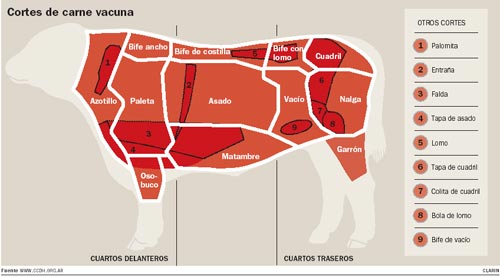
Finally, you must try the culinary delights of Argentina. Everyone knows that meat is king here, and it is for a very good reason. You have to try parrilla and go to an asado (with locals preferably) during your stay! One well-known restaurant parrilla, Siga La Vaca, has all you can eat parrilla, dessert and wine for about $100 pesos. Go! Really, go. Porteños also know how to do ice cream which is the perfect treat during the sweltering summers in the city. Check out Mente’s previous blog on the yummy helado in Buenos Aires.

Must-see Buenos Aires is kind of general, because everything is a must-see. Just walking through Palermo is a must-see. The Recoleta cemetery is a must-MUST-see; luckily Mente Argentina has a great tour to take you through this fascinating burial ground. Of course you have to go to a Tango show where you will feel like you have been taken back several decades to a simpler time when passion and movement ruled this city. And if you want to practice your own tango skills, sign up for Mente’s Tango program!
There are several monuments, buildings and sites that are worth seeing in Buenos Aires including La Casa Rosada, La Boca and the Women’s Bridge in Puerto Madero. Besides all of these great spots, you should also go to a Boca Juniors soccer match. It isn’t just a soccer game, it’s an experience. From buying the tickets, getting to La Bombanera (the stadium), to all of the chanting and dancing of the dedicated fans. It is an experience not to be missed during your stay.
Outside of the city limits you will find several other great areas to check out. Taking the Tren de la Costa from Olivos to Tigre is amazing, it goes right along the costa and you get a spectacular view of the city. You can hop off and on the train as you wish, so definitely make a stop in Barrancas to check out the antiques and super hip bars in the area. Just a couple of blocks away you can go right to the coast and try out kitesurfing. The next stop, San Isidro, is also worth a look. It has a great little plaza with an incredible cathedral. All-in-all it’s great way to spend a day outside of the city.

So there you have it. Some advice on the things to keep in mind while preparing for travel and while you are here in beautiful Buenos Aires.

Mente and Spanglish: The Perfect Activity to Practice your Spanish

0001p0


A great way to practice your Spanish while studying abroad or volunteering here in Buenos Aires is to go to Spanglish!! Spanglish was designed for foreigners to practice their Spanish skills while giving porteños the opportunity to practice English. Not only is it a language exchange, but it’s also a cultural exchange. You can learn about Argentine culture from an Argentine, and also share your cultural anecdotes.
Here at Mente Argentina we believe that cultural immersion is the most important part of your trip abroad and participating in activities that facilitate this immersion will only make your experience here that much more meaningful, which is why we have added Spanglish night to our monthly activities.
How it works: people arrive and there is a 45 minute check in. This gives you the opportunity to chat with everyone and maybe grab a drink at the bar. You are given a table number and when it’s time to begin everyone goes to their first assigned table. Here you chat with your partner for five minutes in English then switch for five more minutes in Spanish. During this time pizza or other snacks are passed around for munching. Then it’s time to switch!
Spanglish events are always held in super hip bars in some of the coolest barrios in Buenos Aires. Last week we went to Klan Bar in Recoleta, right across from the cemetery. This is a well known area for upscale bars and restaurants with a fun vibe. Afterwards people usually go to another bar with their new friends!
At Spanglish I started with a girl who is studying to become an English teacher. She was about 20 years old and just so sweet! She has been studying for about two years and when I asked how long the program is, she told me that it takes about 10 years!! 10 YEARS! Wow, I couldn’t believe it. What a commitment! It didn’t seem to faze her though. As an American, I feel like we are all so eager to finish our studies as quickly as possible, hopefully having a degree by 22 or 23. But, in Argentina it doesn’t always work that way. They have other obstacles to endure, but they still hold their education as the highest of their priorities. This young woman was extremely dedicated and by going to Spanglish she is able to have one-on-one interaction with native English speakers. This is surely one of the few opportunities that she has to speak with natives, so it has become a vital part of her ‘studies’. By going to Spanglish you are not only improving your Spanish, but also helping the locals with their careers, which in turn may help them improve their social and economic status. All in all, it’s a win-win.
One suggestion that I would make is to bring some topics for discussion. Telling five to ten different people the exact same things about yourself will get dull really quick. Think of some interesting questions and conversation starters before heading over. Some ideas could include: dating culture in Argentina, food, best restaurants, best boliches (off the tourist radar), ideas for traveling in Argentina, ask about favorite vacations or an interesting fact about the person. We all know that people love to talk about themselves, so think of something you would like to know about the porteño sitting in front of you (no matter how random) and ask. They can be a great resource for some insight into the city and the Argentine lifestyle.
Don’t miss the chance to immerse yourself into the bilingual community in Buenos Aires!  Whether you’re studying abroad or doing one of Mente’s many internships you will benefit from a night with Spanglish!

TEFL-ing in Buenos Aires, Everything You Need to Know

map


So you are thinking about going abroad, but you haven’t figured out the best way to support yourself while adventuring the world. Getting certified in TEFL will open doors to visit, live and experience countries all over the world. You will earn a livable wage and be immersed into cultures in a way that you never could have imagined. If you love travel and adventure, getting your TEFL will allow you visit just about every continent and is an excellent investment in your travelling future.

The first thing you should know is what all this acronym business is about:

TEFL: Teaching English as a Foreign Language

ESL: English as a Second Language

EFL: English as a Foreign Language

TESOL: Teaching English to the Speakers of Other Languages

So, basically you can see that they all pretty much mean the same thing. TEFL is the most common acronym for teaching English abroad.

With a TEFL certificate you will be able to teach in numerous countries around the world, including Thailand, Korea, South America, and Spain. The requirements vary from country to country, but in general you will be considered a good candidate if you possess a TEFL certificate, are a university graduate, are a native English speaker (duh!) and either have lived abroad or have a desire to experience another culture. Some countries have a fairly relaxed system for foreigners entering and working, however others may strictly enforce work visa vs. tourist visa regulations.

Some countries, especially in Asia, will sponsor your visa, pay for your plane ticket, give you housing upon arrival AND pay you a decent living wage. Japan was once the hot spot for teaching English, however now the market is flooded. Korea, however, still actively seeks hundreds, if not thousands, of new teachers every year.

Here in Argentina you can enter on a tourist visa good for three months (this is for citizens of most countries, check http://www.argentina.gov.ar/argentina/portal/paginas.dhtml?pagina=1245 for detailed info on your country) which can be renewed either by going to Uruguay or any neighboring country, or at immigrations. Unless you work for a big, possibly corporate, language institute, you probably won’t be able to get sponsored by your employer for a work visa. There are some English institutes that do sponsor visas, however, you may have to pay for the visa (about $600) and they tend to pay about half the amount that most institutes pay (which is half the amount that you would make if you worked for yourself). Although you aren’t going to get rich teaching English in Argentina, unless you are incredibly innovative and driven, and planning to stay awhile, you will find that you make plenty of plata to support yourself.


Frequently Asked Questions (Answers specific to Argentina)


Where can I do the TEFL?
Buenos Aires! It is possible to do the TEFL in several locations, in your home country, abroad, even online; however, doing your TEFL in Buenos Aires is certainly the best option if you plan on teaching in BA. During your course you will have a chance to get to know the city, begin inquiring about jobs and make connections. With Mente you can choose to live in a shared apartment where you are sure to meet people  your own age also living in Buenos Aires or private accomodation.

Do I need to speak Spanish?
In your classes it is not necessary to speak Spanish, however knowing the basics will come in handy from time to time. On the other hand, being able to communicate in Spanish outside the classroom will make for a much more enriching cultural experience in Buenos Aires. You will be able to meet more people, have more involved conversations and simply manage the city a little better. So why not sign up for one of Mente Argentina’s intensive Spanish immersion courses to bruch up on that Spanish you learned waaay back in high school?
There is a surprising number of English speakers in the city, whether it’s their first language or not, you will almost always be able to find someone to talk to or get help from if you don’t speak very much Spanish. That being said, you are going to another country and it can be viewed as ignorant if you expect to only speak English. Plus speaking another language is fun!

How long?

As long as you want! Most schools ask for a 6 month commitment, but the reality is that if they don’t provide a work visa for you, you are not obligated legally. However, being the honest and ethic person that you are, you will give at least one month’s notice of leave to your potential employer.

How old?
You must be at least 18 years old.

What if English is NOT my native language?
It will depend on the circumstances. If it is not your native language, but you have lived extensively in an English speaking country and have a fairly neutral accent you may be able to find work. Because English isn’t your native language, you may be required to have additional qualifications, for example a Bachelor’s or Master’s degree in English or Teaching English as a Second Language. Check with individual institutes for their specific requirements.

Can I bring my partner/children?
A partner, yes. Children, probably not. If you have a partner who is also a native English speaker, s/he will probably be able to find work as well. However, the salary here is not going to be enough to support children. I know plenty of couples who come down to work and it will actually make your cost of living cheaper, i.e. sharing accommodation and food, but I would not recommend trying to raise children here on teacher wages.

Can I find a job before I leave?
It’s possible, however most companies don’t hire unless you are actually physically here for an interview. Check out craigslist to get an idea of what employers are looking for. You can always email them to get a little more information and send in your resume, but honestly you probably won’t find work until you arrive. But don’t worry, once you’re here you will have more work than you can handle! Especially if you go through Mente Argentina’s TEFL program because the school will assist you in finding local work with a good salary.

When do jobs start?
Argentina is in the Southern Hemisphere which means that their school year starts in March. Even people who are not in school or University will still follow this schedule, and so most institutes don’t hire between December and March either. The best time to start looking for a job is the end of February or beginning of March, then again in June and July when the second semester begins.

Climate?
Buenos Aires is beautiful in the spring (late September to early December) and the fall (late March to early June) and has relatively mild winters with temperatures never falling below freezing and average rainfall. The summers, on the other hand, are insoportable. In other words, unbearable. Hot and humid days followed by hot and humid sleepless nights. During the month of January the whole city seems to empty as most porteños take their vacations and head to the beach! Although it might be a tough time weatherwise, it actually might be the perfect time to do Mente Argentina’s month-long TEFL certification course because then in February when everyone is coming back from vacation and getting back into their routines you will be certified and ready to teach! Not to mention you will have public transportation down and be able to navigate yourself around the city as the people start flooding back in.

Work visa?
In Argentina you probably won’t get a work visa from the company that you work for. So keep your tourist visa current by visiting Uruguay, Brazil, Chile or wherever your heart desires and you will be good to stay in Argentina.

Working conditions?
Working conditions will vary depending on several factors. Most likely you will not be working set hours all at the same company (although some people do) so working conditions can be anything from a comfortable classroom in Palermo to a coffee shop or even at the individual’s office. The hours can be super sporadic as well, so flexibility is key. Here in Buenos Aires you might start out with a couple of classes a week averaging around 10 hours, then you will pick up other hours and after about 2 months likely have more work than you care to take on. Little by little your schedule will come together, then fall apart the next week. While there isn’t a lot of stability, there is almost always enough money.

How much will I make?
On average institutes pay their teachers between 30 and 40 pesos per hour. That is about $8-10 USD which is a livable wage here, providing you are working enough hours. In the beginning it will probably be difficult to have a schedule busy enough to support yourself, but after a couple of months you will likely be making enough to support yourself and enjoy your free time.  The wages earned teaching English, although they may be low by your standards, are actually quite good for a young adult in Argentina because the cost of living is less than the US or Europe. Don’t get me wrong, this city is not cheap, but if you can budget your money (i.e. not eating out every meal, only going out on weekends, doing free activities like going to the park) you will surly make ends meet.

Housing?
During your first month here with Mente’s TEFL program you can elect to stay in a shared apartment, a homestay or a dorm. After that craigslist will be your best friend while you are looking for a more permanent housing situation. There are plenty of shared apartments in the city and depending on the neighborhood you can expect to pay between $300-600USD for a room in a shared apartment. There are several real estate offices where you can find private studios or one bedroom furnished apartments in the city, but expect to pay a minimum of $800USD per month. And unless you’ve landed an AMAZING teaching job, your salary will unlikely support rent this expensive.

Health insurance?
Argentina has socialized healthcare, so going to the hospital in an emergency or for anything really is possible. However, going to a public hospital means an insane wait followed by less than state of the art facilities. Many people, Argentineans included, opt to pay for health insurance outside of the public realm. Private healthcare is excellent, doctors even do house calls! Plan on spending about $100 a month.

Transportation and Travel?
Transportation within the city is incredibly affordable. A ride on the subway will cost you $1.10 peso (about 25 cents) and even leaving the city to the surrounding suburbs is also very cheap. Taxi’s don’t cost too much either, with an average price of about $25 pesos or $6USD obviously depending on how far you are going. However, traveling extended distances like to Iguazu or Mendoza will cost quite a bit (check out plataforma10.com to get an idea). A bus to Iguazu is about $100USD each way.

Who will my students be?
Classes vary and depending on what type of class you prefer to give you will probably be able find what you are looking for. It seems that everyone wants to learn English in Buenos Aires, children, professionals, students, stay at home moms, just about any demographic you can think of will probably have a demand. You might give group classes at a business or private lessons to the guy who owns a local arts and crafts shop down the street. It’s nice because there is always work and it is always a little different.

What if I hate it?
You won’t! Well, I guess I can’t speak for everyone, but this is going to be the experience of a lifetime and if you have an open mind and some motivation you are sure to enjoy your time here! That being said, in the unlikely event that you don’t like the work or can’t find your niche here in Buenos Aires, you aren’t obligated to stay. You may want to try out another city or country while you are here in South America and you will be able to take your TEFL with you! All in all, you don’t have anything to lose!


Teaching abroad is the best way to experience a country. You will make great friends, find day to day life to be challenging, but always very exciting and get to see the culture through the lives and experiences of your students.

So if your New Year’s Resolution has anything to do with travel, culture or language, you better sign up for the TEFL now! Spending a year abroad will be one of the most exciting and memorable years of your life, so don’t wait any longer!

Mente’s Top 3 Culture “Shockers”

Obelisco noche

When you first arrive to study abroad in Buenos Aires you will most likely marvel at how beautiful, modern, and familiar the city is. With a well-developed infrastructure, a subway, and up to date technology, Buenos Aires is in many ways similar to an urban area of a similar size in the U.S. and Europe. That being said, certain aspects of life while you study abroad Buenos Aires can feel very foreign compared to what you’ve experienced in your home country. In this way Buenos Aires can be deceptively different. One could even argue that this alluring mix of being both exotic and user friendly is what makes Buenos Aires such an excellent choice for a wine course, to study Spanish, or to learn to be DJ abroad.

In our last blog we provided a basic overview of the symptoms and process of “culture shock”, the natural, inevitable, and often turbulent adjustment period every person goes though during their first weeks of study abroad in Argentina. In this installment we’ll get into more detail. We’ll check out three primary cultural differences that can be a little bit “chocante” (shocking), but when viewed from a different perspective have their own positive qualities that will always teach you something new.


SPACE
One of the first things you’ll undoubtedly notice as soon as you set foot in Buenos Aires is the sheer physical impact of the city.  You’ll be surrounded by tall buildings on all sides and confront grinding traffic everywhere you turn. As a pedestrian, you will soon discover that you do not have the right-of-way in most traffic situations. In Buenos Aires cars turning both left and right, even in stoplights, do not yield to foot traffic. On the sidewalk you’ll walk along floating in a sea of other people, and on public transportation you’ll have to get used to not having the same personal space “bubble” you might be accustomed to at home as you find yourself pressed again other people at rush hour.

The Upside: Buenos Aires is the 7th largest city in the world, a dynamic metropolis of 3 million people inside the boundary of Capital Federal and 13 million in the province of Buenos Aires. Although hard to adjust to, some of the more claustrophobic elements are small price to pay for such an amazing city so jam-packed with culture, the arts, shopping, restaurants, and people from all over the world.

Although there is indeed a great deal of traffic and noise, but you’ll also find that by hopping on any public transportation or taxi you’ll find yourself on the steps of a museum, at a rooftop party, watching live music, cheering at a sporting event, sitting in the dark of a movie, or gazing at breathtaking architecture in more or less 30 minutes. Public transportation is the lifeblood of the city, ferrying thousands of people across Buenos Aires every minute of everyday. If you’re addicted to your car or a homebody in your country of origin, it can be liberating and magical to see so many people and being constantly confronted with new faces and situations.


TIME

Yeah, it sounds kind of  metaphysical, but time in all of its forms will be one of the biggest “culture shockers” you’ll have to adapt to. The Rolling Stones (known as the ever  popular, “rollingos” in Argentina) once sang “time is on my side” but you’ll undoubtedly feel the opposite during your first months of any study abroad program in Buenos Aires. Here are some key issues:

Punctuality – You may have heard it before, but arriving late in Buenos Aires is very common, and in many
situations tardiness is anticipated, even expected, and rarely requires an apology. Expect 15-40 minute delays on casual meetings with friends, or even academic or medical appointments. When you make social plans with your new argentine amigos, expect that people will show up later that the agreed upon time, and consider doing the same yourself. You’ll never feel like you’re in a rush and you’ll also get to enjoy those crucial extra minutes to put the finishing touches on your outfit before you go out and enjoy Buenos Aires’ famous nightlife.

Late Hours: One of the things newcomers often find most shocking and different about Buenos Aires are the later hours. People eat dinner between 10 pm and 12 am (on the weekends), don’t arrive at bars until after midnight, and enter boliches (clubs) at 2 am at the earliest. When you first arrive in Buenos Aires socializing might seem like an endurance contest in terms of both fatigue and hunger, but within a few weeks you’ll adjust and it will feel natural to eat and go out later. In fact, you’ll probably eventually be shocked that people would even consider eating dinner before sunset or stop dancing before sunrise.

Pace of Life: If you come from a culture or city where convenience, efficiency, and productivity reign supreme, you might find yourself a bit frustrated when you come to take a short course in Argentina or study Spanish in Buenos Aires. Expect long waits at the post office and supermarket, as well as a generally slower life rhythm where tasks aren’t rushed and may take longer. Waiters don’t regularly check up on clients at restaurants, so you might have to ask several times to order or get your check. Also, in terms of the duration of social events, you might find that social gatherings last longer, and that people tend to linger over dinner or drinks with friends and enjoy sitting and talking for long periods of time.

Business Hours- Most normal businesses close at 8pm, and restaurants on weekdays by midnight and 2am at the latest on the weekend. With some exceptions such as McDonald’s and certain cafes concentrated in Palermo Soho where you can grab food at all hours, don’t expect to find a 24 hour diner around every corner. Also, most non-restaurant businesses (with the exception of some malls and shopping districts) have limited Saturday hours and are closed completely on Sunday, so prepare to let go of the idea that weekends are a time to complete your long list of errands and you’ll learn to cherish them as relaxation time. The same applies for the Argentine summer season (January to March), when businesses may close down for weeks at a time.


The Upside: If you are used to getting caught up the daily grind of being busy, “getting things done”, and constantly being on the go, coming to study abroad in Argentina will most likely be an opportunity for a profound life lesson in slowing down, taking time to enjoy, and having more patience. Not having to rush everywhere and be so self conscious about time can be liberating in its own way. The DMV (for Americans) will later seem like a breeze. Of course, it’s frustrating when things take longer or people show up late, but you can harness Argentina’s cultural flexibility with regards to time to your advantage. You’ll get deep into conversations with your new international friends without servers pushing you to free up your restaurant table, and you won’t have to worry about getting in trouble for not arriving on the dot.

The structure of Argentine society forces leisure time to be truly relaxed and social. Sundays are truly Sundays and vacation is truly vacation. This is something we often lose sight of our rushed and neurotic home countries, and perhaps one of the most valuable lessons learned on study abroad in Buenos Aires.


FOOD

Argentina is a land of culinary wonders, something you undoubtedly already know if you’ve for a wine course in Buenos Aires or to study cooking in Argentina. Between the beef, wine, ice-cream, and host of other Spanish, Italian, and Porteño foods you’ll find here, there’s little not to like. That being said, as in any foreign environment, there are some new challenges to adapt in terms of feeding yourself.

Breakfast in Argentina is an understated affair, often taken in the form of toast or cookies, tea, coffee, or mate and perhaps a small yogurt or cereal. If you’re used to bacon, eggs and hashbrowns this might take some getting used to. In the same vein, dinner is late, usually after 10pm whereas lunch takes generally place from 1-2pm, so learning to time your body’s hunger to a new system is a gradual and sometimes stomach-growling process.

Other things you may notice are that, with a few exceptions, many vegetables and other raw produce come unwashed and unpackaged, requiring you to use a little more elbow grease at home. You’ll have to ask for each item personally, and for travelers not accustomed to the metric system it’s a very useful crash course. Another new challenge might be that fact that apart from big corporate supermarkets (see our comments on long lines above) you’ll probably have to buy the components of any meal at several small local businesses such as a verdulería for fruit and vegetables, a carnicería for meat, and a small kiosko or chino (Asia immigrant owned supermarket) to buy packed goods like cookies, soft drinks, or condiments.

The Upside: This can seem like a hassle, but you’ll burn a few calories ferrying your heavy bags from block to block (making you resemble your svelte fellow porteños) and you´ll get a chance to get to know your neighborhood better. If you’ve been taking an Intensive Spanish Course in Buenos Aires there is no better opportunity to try out some key Spanish phrases during your shopping transactions. You’ll form friendly relationships with the vendors in your neighborhood giving you great exposure to the culture and enriching your study abroad in Argentina experience!

Many foreigners decry the lack of ethnic food in Buenos Aires, but if you look closely and read up you’ll find ample offerings within Buenos Aires’ Chinese, Japanese, Korean, Peruvian, and Middle Eastern communities. Craving a shwarma sandwich,  sushi, or just plain old American brunch? Mente Argentina’s young bilingual support staff can help you with some local insider recommendations.

Another common misconception is that vegetarians cannot survive in Argentina, and this is not the case. Although Argentine culture reveres meat and you’ll notice there’s a parilla around every corner, there are plenty of options both inside and outside of traditional Argentine cuisine available for vegetarians in Argentina. Try a tarta de verdura (vegetable quiche) tortilla de papas (Spanish potato omelette) or guiso de lentejas (lentil stew), all commonly served in restaurants. And don’t forget to sample Buenos Aires´ amazing selection of fresh made pastas, pizzas, and other non-meat Italian fare. You’ll even find a decent quantity of ever more popular vegetarian restaurants including some fantastic vegetarian lunch buffets this Mente staff cannot live without! If you come to visit our student reception office you’ll find well-fed vegetarian and staff members who can give you great tips.


All in all, although aspects of life in Buenos Aires, Argentina can be new and challenging, no one embarks on an exciting journey to travel or study abroad internationally expecting everything to be the same. Cultural contrasts challenge us; show us a different side of life, and most of all teach us about ourselves.

More to come!


Kayla Burchuk

Mente on the Music of Buenos Aires

creamfields Buenos Aires 2011

Buenos Aires is truly a city that never sleeps, so finding something to do is as easy as walking out your front door. It is a great city for study abroad students from all over the world because there is something for everyone, especially when it comes to music. It doesn’t matter where you are from or what you are into, you will find your niche here. In Buenos Aires you will find that you spend your days hustling to and from all those Photography or DJ classes, but at night you are free! And you will be surprised at the abundance of activities this city hast o offer. Check out Mente’s previous blog Buenos Aires Nightlife: 7 nights a week for the best bars and clubs in BA!

Creamfields—November 2011

For those of you who are unfamiliar with Creamfields, it is the electronic party of the year with locations all over Europe and Latin America. For those of you who have experienced the craziness of Creamfields, you know that it is the ’it’ place if you live for beats and bass. Buenos Aires continually draws the more guests than any other venue with more than 50,000 people every year. Luckily for us here in Argentina, Creamfields has been mixing dance beats in Buenos Aires for the last 10 years with headliners including David Guetta, Paul van Dyk, The Prodigy, Paul Oakenfold, Dubfire and many, many others.


In some countries Creamfields is a multiday event where you can spend the weekend camping. Here in Buenos Aires it is just a one day event, or more specifically, a one night event. It starts at 5pm and goes all night and well into the next day. DJs will be mixing all the latest tunes and their own dirty beats so don’t plan on sleeping that night! If you are in Argentina studying abroad, or perhaps doing the DJ program with Mente Argentina, this is going to be the most important concert of your stay.

Creamfields isn’t the only good electronic music that you will find here; Buenos Aires has an ever-growing underground electronic scene. Check out http://www.buenosaliens.com/ for information about upcoming shows!

Besides the huge electronic scene, there are also tons of local and internationally celebrated bands that come to rock the city in a way only possible in Latin America. Buenos Aires is a hotspot for music of all types and no matter what you are into, you will find it here. Recently the Red Hot Chili Peppers played a sold out show, next up is Interpol, The Strokes and Roger Waters. For those who love the poppy sounds, BA caters to you as well. Katy Perry, Mylie Cyrus and Madonna entertained us with their catchy tunes.

In addition to all the big names that come through Argentina, the local scene is also jam-packed with talented artists playing at a variety of great venues. So maybe it’s time to veer away from these popular artists and check out the local music scene. Argentina is famous for its tango and you can still hear it playing in the background of many restaurants, kioskos, and maybe even from your neighbor’s apartment. Its antique and tragic sounds are romantic in their own way, but if a slow, dramatic tango isn’t really your style, maybe you will enjoy the fast and always fun sounds of cumbia. Cumbia started in Colombia and quickly spread through Latin America, and Argentina is no exception. Most boliches, or clubs, play a mix of the top ten hits, reggaetone and cumbia, occasionally throwing in some rock n roll. But if live music– rock, indie, folk, and everything in between–is what you live for, this is the city for you! Cute cafes, cultural centers, nightclubs, and huge stadiums all host a variety of bands and genres from all over Argentina and the world. And if the weather is nice, you can even catch a band rocking out in the park on the weekend!

What’s up Buenos Aires (http://www.whatsupbuenosaires.com/wuba2/) posts a daily agenda of live music, as well as other cultural activities, and is an excellent resource for getting to know the music scene in BA. Also, check out http://www.vuenosairez.com/V2_1/ and http://www.latrastienda.com/  for even more ideas.

So what are you waiting for?? Get out there and enjoy every night to its fullest!

Coping with Culture Shock While Studying Abroad in Argentina

colectivos buenos aires

The decision to study abroad in Argentina is an amazing opportunity to transform your life and world view, but it does come with some challenges. You’ll be living in a totally different country; and there will be an initial period of adjustment to social customs and norms that may lead to emotional discomfort and anxiety. Known as Culture Shock, these experiences are a normal part of study abroad in Buenos Aires.

Culture is the pattern of learned behaviors and beliefs of a group of people, something you’ll immediately notice as markedly different as you embark on your journey to study abroad in Argentina. Growing up in our home countries our native culture is like the air we breathe, it surrounds us in every aspect of our lives yet seems so natural it remains invisible to us. Whether it’s how to maneuver your body in a public place, have basic social interactions, or simply order cup of coffee, these daily practices are so obvious to us at home they feel second nature, and we can go through the motions of everyday life without a second thought.

When we arrive in another culture this is certainly not the case! Even if you initially came to study Spanish in Argentina, language probably won’t be the only thing that’s hard to interpret.  Whether you’re bumping into people on the bus, struggling to buy groceries, or awkwardly cheek kissing your classmates , everything suddenly becomes a challenge and that can be frustrating and exhausting. You are not alone!  Everyone coming to live in another culture whether it’s to complete a short course in Argentina, Study Spanish, or Complete a master’s degree in Buenos Aires over a longer period of time has a bumpy transition at first.

Any person moving between countries and cultures experiences some degree of culture shock. Some common symptoms you might recognize when you first come to study abroad in Argentina might include:

  • feelings of helplessness/ vulnerability
  • feeling lost,  confused, overwhelmed
  • anger
  • sadness
  • irritability
  • longing for  home and old friends
  • physiological stress reactions
  • excessive concern over cleanliness and health
  • boredom
  • withdrawal/staying home
  • insomnia or  excessive sleep
  • idealizing home culture
  • stereotyping host nationals
  • hostility towards host nationals

Like any major social transition, adapting to a new culture takes time, and evolves and gets better as time passes. That’s great news! Culture shock can feel like a wild roller coaster with lots of ups and downs but it is important to keep in mind that things do get better with time as you pass through the various marked phases:


Honeymoon / Excitement Stage

Everything is new and romantic, leaving you feeling euphoric. Every moment of the first stage is filled with new observations and discoveries about the food, people, and other details of Argentine culture. You’ll be fascinated with the city of Buenos Aires; Spanish, the pace of life, and every moment will feel like an adventure! The rush of foreign stimuli makes you overlook major cultural differences at first, a sense of curiosity and excitement masks any potential discomfort.

Negotiation/  Withdrawal Stage

Weeks pass and  your sense of romantic wonder may fade as you get deeper into your time spent on study abroad in Argentina and cultural differences become more apparent. You’ll notice that there are things you don’t understand, that you have trouble communicating your needs, or make embarrassing social mistakes, all which can lead to frustration, anger, homesickness, and many of the symptoms described earlier. Everything will be strange and unpredictable, leading you to want to withdraw, but stay optimistic and don’t be afraid to seek support! Having a local friend on your side, like Mente Argentina’s always supportive Coordination Team, can be crucial during this bumpy stage.

Adjustment Stage

As more time passes you begin to adapt to differences, discover problem solving strategies, and develop daily routines that help you cope and enjoy life in Buenos Aires. If you came to study Spanish in Argentina, your language abilities will be greatly improved at this point, letting you communicate and minimizing friction with the new culture. You know what to expect, have a new set of reflexes and reactions, and everything starts to make sense. Congratulations! This is the time when you really begin to reap the benefits of your study abroad in Argentina experience, with new local contacts, a deeper sense of cultural understanding, and more access to all that study abroad in Buenos Aires has to offer.

Mastery Stage

Functioning in argentine culture has become second nature to you as you go about your normal life. You can participate fully and comfortably in most Argentine social and cultural events, have many new friends, and enjoy life in Buenos Aires to the fullest. If you have lived abroad for a longer period doing a Master’s Degree in Argentina this is probably you.  Mastering the culture doesn’t necessarily mean blending in and losing your old identity, because now that you have more experience you can pick and choose aspects of both cultures you want to incorporate into your life. You feel at home in multiple countries and cultures, and are a true global citizen. Congratulations!

Time is the number one cure for culture shock; however there are certain practices and attitudes you can adopt to help you along your multicultural journey of study abroad in Buenos Aires!

1.Be Open Minded: The key to reducing culture shock is to have an open and positive attitude towards the country that you’re visiting or planning to live in. There’s no greater guarantee for unhappiness in a foreign environment than taking your prejudices with you. It’s important when trying to adapt to a new culture to be sensitive to the locals’ feelings and try to put yourself in their shoes wherever possible, which will help you understand the new culture. Empathy is key.

2. Be Prepared: Reading up on a country and its culture before you leave home will help you familiarize yourself with the local customs and language, and make the country and its people seem less strange on arrival. You’ll know how to anticipate certain events and interactions, which will make you and the locals you interact with more comfortable.

3.Be Proactive: Make a conscious effort to get involved in the new culture; be proactive and go out of your way to make friends. Join in on activities that you know will put you in contact with local people, such as festivals, courses, or other hobbies. There are a number of local sports clubs where you can practice a sport or work out, join an arts workshop, or learn to cook local dishes, taste wine, etc. Getting involved in stimulating activities will help you socially integrate and distract you from missing home.

4. Be Inquisitive: Although it can sometimes be frustrating to be a novice in everything, use your beginner status in a foreign culture as a way to learn, make friends, and absorb as much as possible.  As adults in regular life we often feel stupid or foolish asking basic questions like  “What is that?” “How is that used?” “Why is it this way?” but study abroad is a great chance to regain that childlike sense of wonder with minimal embarrassment. Capitalize on your own ignorance to strike up random conversations or enter situations you normalls wouldn’t. Friendly and outgoing porteños are generally delighted to explain their own culture, and being appropriately curious is a great was to show respect and interest in someone else’s way of life.

5. Be Positive! It might sound corny, but try your best to be optimistic. Many psychologists believe that true happiness can only come from a sense of lasting self satisfaction and inner strength, two qualities that study abroad undoubtedly brings out in a person. Being thrust into a foreign culture can be scary or challenging, but it shows us that there are always things in our environment that we can’t control and teaches how to be adaptive, flexible, and self sufficient. If nothing else, try to focus on how your study abroad experience is helping you grow as a person. When in doubt, try and live in the moment and enjoy the pleasures of daily life in an exciting foreign culture. Your time doing study abroad will be over before you know it!

 Kayla Burchuk

Tours in Buenos Aires: Learning the ins and outs of the city

IMG_1414

Studying abroad in Buenos Aires is a cultural experience in itself; however, in order to get even more out of your stay here in BsAs, Mente Argentina has collaborated with some local tour guides to provide our Mente amigos with even more opportunity to immerse themselves into the fascinating porteño culture. While your Lonely Planet gives great ideas for places to go, you probably won’t find a section on the ghost of Recoleta, Rufina, or the underground tunnels used by the Jesuits to escape to Rio de la Plata. These walking tours are an excellent way to get to know the city, not just the streets and neighborhoods but also the culture and history embedded into every corner of it.

Having already visited some of the sites in Buenos Aires on my own, I know from personal experience the value of taking a guided tour. It was my third time to the Recoleta cemetery, and it started out exactly the same as every other time I had ventured to the creepy cemetery located right in the heart of stylish Recoleta. We walked through the massive entrance and were greeted by the same haunting cats that roam the cemetery day in and day out. This time though the vaults had a story. The family names encrusted on the granite monuments suddenly had more meaning. Mente Argentina’s wonderful guide gave us an idea of the types of families who bury their deceased in such classy quarters. Ironically most of the vaults are neighboring their enemy’s vault. Can you imagine being buried for eternity next to your arch nemesis?
Evita. Oh Evita. The Duarte vault is a typical, stark black granite giving it a distinct ‘modern’ look, compared to the surrounding tombs that mirror the architecture found around the city. It’s hidden in the maze of narrow, empty paths and you probably wouldn’t even know you arrived (especially if you didn’t know that Duarte is Eva Peron’s maiden name) if it wasn’t for the crowd of tourists squeezing around it trying to get a quick photo. Ask your guide about the many locations that Evita’s body was taken to in Argentina, don’t ask her about Madonna’s inaccurate portrayal of the beloved icon.
Next check out Rufina, the ghost of Recoleta. Her tomb is exceptionally beautiful with a statue of a young woman greeting her visitors. Without a guide you may stop and admire the lovely statue, but with a guide you get the full story. Our guide told us the spine-chilling story of Rufina’s death. It is especially eerie when told by an Argentinean in a calm and casual accented English.
Another great tour in Buenos Aires to take while studying abroad or volunteering is La Boca. Boca has been made famous because of the COLOR! It is just a couple of blocks, but it is completely packed with visual stimuli, which is makes this area great for photography. It is an incredibly touristy area, but worth the $1.20 peso bus ride from San Telmo. Speaking of San Telmo, this lovely barrio is also a part of the Boca tour. San Telmo is one of the most unique neighborhoods in Buenos Aires with it’s antique charm and bohemian culture. Walking down the cobblestone streets or enjoying a coffee while watching an impromptu tango couple in Plaza Dorrego will make you appreciate the simple life that was once abundant in the area.

These tours are especially helpful to do during your first week or two in Buenos Aires , because you will be exposed to several different barrios, bus routes and lifestyles within this immense city.  So before you head off to the first week of your internship or Spanish classes be sure and sign up for one (or all!!) of the terrific tours Mente Argentina offers!

Powered by WordPress | Designed by: search engine optimization company | Thanks to seo service, seo companies and internet marketing company