
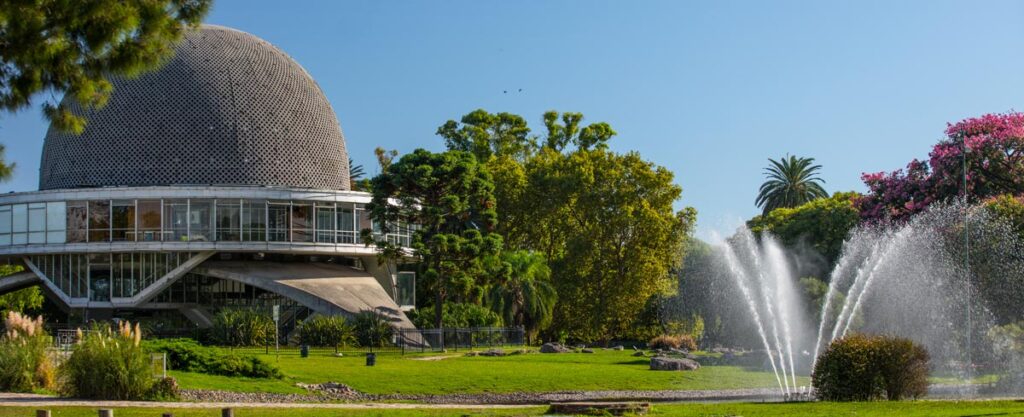
The best neighborhood in Buenos Aires depends on what you want your days to look like. A first visit, a Spanish course and a university semester can call for different bases. Start with your class or work address, then compare the journey, the housing itself and the places you will use every day.
This guide helps you compare the city’s neighborhoods for staying, studying and exploring. You will find practical trade-offs, places that give each area its character and a directory covering all 48 official barrios.
Where to stay in Buenos Aires: a practical shortlist
- Palermo: Consider it if cafés, parks and evenings out matter to you. It is a large neighborhood, so the exact part of Palermo makes a substantial difference to your commute and surroundings.
- Recoleta: Consider it for museums, established shopping streets and a central city routine. Compare the walk to transport from each address rather than relying on the neighborhood name.
- Belgrano: Put it on your shortlist when your study or work destination is in the north of the city. Check the route to the specific university building or campus.
- San Telmo: Consider it if the historic center and its atmosphere are priorities. Look carefully at the condition of the building and the journey to your daily activities.
- Almagro, Caballito or Villa Crespo: Include these in your comparison if their location fits your routine. Assess the full housing offer and transport connection rather than assuming they will always be cheaper.

Understand the names on the map
Buenos Aires has 48 official neighborhoods, organized into 15 comunas. You will also hear names for smaller areas that are not separate official barrios: Palermo Soho and Palermo Hollywood are parts of Palermo; Barrio Norte is a commonly used area name; Microcentro describes a central business area; and Once is associated with part of Balvanera.
These labels are useful in conversation and housing searches, but they are not interchangeable with official boundaries. Ask for the street address and use the city’s neighborhood and transport maps when the location matters.
Palermo: parks, cafés and evenings out
Palermo offers several different versions of city life. The areas commonly called Soho and Hollywood attract people looking for cafés, restaurants and nightlife, while the parks offer a different pace. Being “in Palermo” does not necessarily put you near both.
For a longer stay: Compare the exact block, room orientation and route to class. If you expect early mornings, ask about nearby nightlife and traffic before choosing a room. For exploring, combine a café stop with a walk through the neighborhood’s green spaces.

Recoleta and Barrio Norte: museums and everyday convenience
Recoleta brings together cultural landmarks such as its cemetery, the Museo Nacional de Bellas Artes and the Centro Cultural Recoleta. It can suit someone who wants museums and established city streets within their daily surroundings.
For a longer stay: Check the distance from the apartment to groceries and your most useful transport connection. If a listing says Barrio Norte, use the exact address to establish where it is. That familiar area name is not an additional official neighborhood.

San Telmo: the historic city at walking pace
San Telmo is a place to explore older streets, the market area and the surroundings of Plaza Dorrego. Its appeal is different from the broad parkland of Palermo or the newer dockside setting of Puerto Madero.
For a longer stay: Look beyond the charm of an old building. Ask about natural light, ventilation, stairs, noise and the facilities you will use every day. A weekend visit and a weekday journey to class will tell you different things about the same address.

Puerto Madero: dockside walks and a newer cityscape
Puerto Madero’s converted docks, modern buildings and Puente de la Mujer give it a distinct setting. It works well as an area to explore on foot and compare with the historic streets farther west.
For a longer stay: Check the complete route to university and the location of practical errands. A central-looking position on the map does not guarantee a convenient public transport connection from the building’s entrance. Compare the total housing cost and included services.

La Boca: colorful streets and football identity
Caminito and La Boca’s connection with Boca Juniors make it one of the city’s recognizable destinations. Plan a visit around the places you want to see rather than expecting the whole neighborhood to function like its best-known tourist streets.
For exploring: Decide how you will arrive and return, and check current access information for attractions or match-day activities. Choosing a place for an outing is a different decision from choosing accommodation for a semester.

San Nicolás and Microcentro: theaters and the downtown grid
San Nicolás includes major downtown landmarks such as the Obelisco and Teatro Colón. Microcentro is a commonly used name for the central business area, not a separate official barrio or an exact synonym for San Nicolás.
For a longer stay: Visit the immediate surroundings at the times you expect to use them. Office streets, theater streets and busy avenues can have very different rhythms. Check traffic noise, room insulation and the walk between your building and transport.

Belgrano: neighborhood life and northern study destinations
Belgrano combines residential streets with the activity of Avenida Cabildo, Barrancas de Belgrano and Barrio Chino. It deserves a close look if your classes are at a northern city location, but the correct comparison is always address to address.
For exploring: Build a route around the part of Belgrano that interests you. The Monumental stadium is officially in Belgrano, even though River Plate is commonly associated with neighboring Núñez.


Almagro: tango, cafés and a lived-in city routine
Almagro is worth exploring for its tango associations and traditional café culture. It also offers a different setting from the tourist-focused parts of the historic center.
For a longer stay: Compare the routes along the main avenues with the feel of the quieter side streets. If you are looking for the Abasto shopping area or the Museo Casa Carlos Gardel, check Balvanera rather than assuming those places fall inside Almagro.

Balvanera, Once and Abasto: overlapping local identities
Balvanera is the official neighborhood; Once and Abasto are familiar names associated with areas within and around it. The neighborhood combines shopping activity with cultural landmarks, including the Palacio de Aguas Corrientes.
For a longer stay: A broad area label is not enough to choose housing. Check the particular block, pedestrian traffic, transport access and the surroundings of the entrance. For exploring, choose a focused route instead of trying to cover the whole area at once.

Caballito: parks and an everyday residential rhythm
Caballito offers places such as Parque Centenario and the Mercado del Progreso alongside residential and commercial streets. It can be a useful area to compare when your regular destinations are in the central or western parts of the city.
For a longer stay: Work backward from your daily journey. Being near a useful transport line can matter more than being close to a landmark you might visit only occasionally.

Chacarita: a different perspective on the city
Chacarita’s cemetery is one of its defining landmarks. A visit here can be part of a broader exploration of neighborhoods beyond the central tourist circuit.
For a longer stay: Compare the immediate setting of each address. Main roads, transport interchanges and residential streets serve different purposes, and the neighborhood name alone will not tell you how a room feels at night.

Colegiales: a base to compare with nearby neighborhoods
Colegiales is an option to investigate alongside Belgrano, Chacarita and Palermo when planning a stay in the north of the city. Treat each possible address as its own choice rather than an extension of a neighboring area’s reputation.
For a longer stay: Check where you would buy groceries, study outside the apartment and catch transport. Those repeated small journeys will shape your experience more than a single attractive street.

Monserrat: Plaza de Mayo and the historic center
Monserrat is a starting point for understanding the historic center, including Plaza de Mayo and the Avenida de Mayo corridor. It is useful to explore alongside San Nicolás and San Telmo while keeping the official boundaries distinct.
For a longer stay: Check how your proposed address connects with your university and evening plans. A location that is excellent for sightseeing may still involve a substantial daily commute.

Mataderos: an outing with a regional cultural focus
Mataderos is associated with its fair and expressions of Argentine regional culture. If that is the reason for your visit, confirm the fair’s current calendar before setting out rather than assuming a fixed weekly schedule.
For planning: Allow time for the journey and decide what you want to see. For accommodation, assess its distance from your regular activities separately from its appeal as an excursion.

Núñez: assess the northern location carefully
Núñez belongs on the comparison list when your plans involve the north of Buenos Aires. Do not use the name as shorthand for every nearby university or sports venue: local associations and official boundaries do not always match.
For a longer stay: Check the route to your actual destination, including the final walk. If a listing emphasizes access to River Plate or a campus, verify that claim with the address rather than the neighborhood label.
Retiro: landmarks and transport connections
Plaza San Martín is a natural starting point for exploring Retiro. The neighborhood also includes important transport facilities, making it particularly important to understand which part of Retiro a listing refers to.
For a longer stay: Ask for the exact location and consider both your daily route and the immediate surroundings. Proximity to a major terminal can be useful for one journey without being your priority for everyday life.

Villa Crespo: compare the block, not the trend
Villa Crespo offers another area to explore for cafés, neighborhood streets and local activity. Its proximity to Palermo can be useful, but it has its own identity and should not be treated as simply another name for Palermo.
For a longer stay: Compare housing quality and the complete journey to class. A fashionable area description tells you little about natural light, noise, usable workspace or what is included in the rent.

Villa Devoto: a destination around Plaza Arenales
Plaza Arenales provides a focal point for a visit to Villa Devoto. Include it when you want to explore a different part of Buenos Aires beyond the neighborhoods most often used as a first base.
For a longer stay: Check the commute before deciding that a pleasant setting is the right fit. The answer may be different for someone studying nearby and someone traveling across the city each morning.

Villa Urquiza: plan around your transport connection
Villa Urquiza is another residential option to investigate in the northwestern part of the city. Your experience will depend on the particular address and how it connects to your regular destinations.
For a longer stay: Compare the walk to transport, the number of transfers and the journey home after your latest regular activity. Test the complete route rather than comparing straight-line distances.

Boedo: tango associations and café stops
Boedo is a neighborhood to explore through its tango associations and café culture. It offers a reason to look beyond the better-known central and northern visitor districts.
For planning: Choose a few places you want to visit and check their current opening information. If you are considering housing, assess the local errands and commute independently of the neighborhood’s cultural appeal.

Barracas: streets with an artistic identity
Pasaje Lanín is a distinctive reference point for exploring Barracas. Keep your route geographically focused: nearby attractions in another neighborhood should not be assumed to sit within Barracas itself.
For planning: Map the places you want to see and your journey back. For a longer stay, investigate the individual address and building, especially if you will travel frequently to destinations elsewhere in the city.

Parque Patricios: explore beyond the usual visitor circuit
Parque Patricios offers another perspective on Buenos Aires, with neighborhood streets and green spaces including Parque Florentino Ameghino. It can be part of an itinerary focused on understanding more of the city.
For a longer stay: Compare access to your actual activities and the services around the proposed accommodation. A citywide neighborhood ranking will be less useful than a realistic daily route.

Parque Chas: a distinctive street layout
Parque Chas is known for a street pattern that stands out from the regular grid found across much of Buenos Aires. It is a neighborhood to explore with a map rather than assuming every turn will follow the same pattern.
For planning: Save the precise address and transport route before you go. If you are considering living here, check the walking portion of the journey as carefully as the ride.

The remaining official neighborhoods
The profiles above cover 23 official barrios, with informal area names explained alongside them. These 25 complete the city’s 48-neighborhood directory. Their suitability for your stay depends on the same practical questions: destination, route, housing and daily routine.
Agronomía; Coghlan; Constitución; Flores; Floresta; La Paternal; Liniers; Monte Castro; Nueva Pompeya; Parque Avellaneda; Parque Chacabuco; Saavedra; San Cristóbal; Vélez Sarsfield; Versalles; Villa del Parque; Villa General Mitre; Villa Lugano; Villa Luro; Villa Ortúzar; Villa Pueyrredón; Villa Real; Villa Riachuelo; Villa Santa Rita; Villa Soldati.

Before choosing your accommodation
- Confirm the exact address. Identify the neighborhood, the entrance and the location of your main daily destination.
- Compare the complete cost. Ask which utilities, cleaning, meals or other services are included, and compare equivalent room types.
- Check the room itself. Ask about light, ventilation, noise, internet, workspace and any stairs or accessibility needs.
- Test the daily route. Include walking and transfers, and consider the time of your return journey.
- Plan for everyday safety. Assess the immediate surroundings and ask for current local guidance. No neighborhood name guarantees safety.

Continue with our guides to public transport and practical safety in Buenos Aires. If you are joining a program, compare Mente Argentina’s accommodation options with your timetable and preferred style of living.
Frequently asked questions
What is the best neighborhood for a student in Buenos Aires?
The most useful starting point is your class address. Compare possible bases such as Palermo, Recoleta and Belgrano, then choose using the commute, housing offer and routine that fit your program.
Are Barrio Norte and Palermo Soho official neighborhoods?
No. They are commonly used area names. Palermo Soho is within Palermo; a Barrio Norte listing should be checked by its exact address. Buenos Aires has 48 official barrios.
Should I choose housing before I know my university location?
Try to confirm your teaching location first. University classes can take place in different buildings, and the correct campus or faculty address makes housing comparisons much more useful.
Is there one neighborhood that is always the safest?
A blanket ranking cannot describe every block, time of day or individual situation. Assess the specific address, plan your routes and ask for current local guidance.