
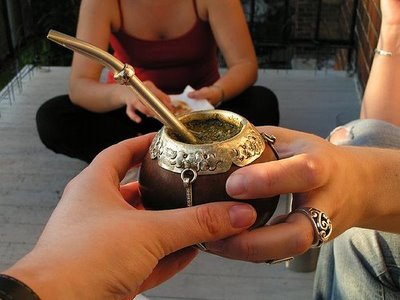
Spend enough time in Argentina and sooner or later someone will hand you a small cup filled with green leaves and a metal straw.
That is mate — and accepting it is one of the simplest ways to participate in everyday Argentine culture.
Mate is made from yerba mate, an infusion traditionally prepared in a small container and drunk through a metal straw called a bombilla. But describing mate only as a drink misses the most important part.
In Argentina, mate is also a social ritual.
Friends share it in parks. Families drink it at home. Students bring it to class. Coworkers pass it around the office. People carry thermoses through airports, universities and city streets.
For international students, learning how to drink mate in Argentina is a small cultural lesson that opens the door to much more: language, friendship, etiquette and the rhythm of everyday life.
What Is Mate?
Mate is an infusion made with dried leaves and stems of the yerba mate plant.
The word mate can refer both to the drink itself and to the container traditionally used to prepare it.
The basic ingredients are simple:
- Yerba mate — the dried plant used to make the infusion
- A mate — the cup or vessel
- A bombilla — the metal straw with a filter at the bottom
- Hot water — poured gradually over the yerba
- A thermos — used to keep the water hot while the mate is shared
Traditional mates may be made from gourd, wood or other natural materials, while modern versions can also be made from metal, ceramic, glass or synthetic materials.
You will see enormous variety in Buenos Aires, from simple everyday mates to beautifully decorated ones that people keep for years.
Why Is Mate So Important in Argentina?
Mate is deeply connected to everyday social life in Argentina.
It can be something you drink alone while studying, but its most recognizable form is communal.
One person prepares the mate, fills it with water, drinks it and then refills it before passing it to the next person.
The same mate and bombilla circulate through the group.
That might feel unusual if you come from a culture where everyone receives an individual cup, but in Argentina the sharing is part of the tradition.
Offering someone mate can be a simple gesture of hospitality.
Accepting it means participating in the moment.
Mate, Yerba Mate and Bombilla: Essential Vocabulary
Before preparing your first mate, learn these words:
- mate
- The prepared drink and also the container used to drink it.
- yerba mate
- The dried leaves and stems used to make mate.
- bombilla
- The filtered metal straw used to drink mate.
- termo
- Thermos used to carry hot water.
- cebador / cebadora
- The person preparing and serving the mate.
- cebar
- To prepare and refill mate for someone.
- lavado
- A mate whose yerba has lost most of its flavor after repeated refills.
- amargo
- Mate without added sugar.
- dulce
- Mate prepared with sugar or another sweetener.
If you’re learning Spanish in Buenos Aires, mate provides exactly the kind of vocabulary that rarely appears in a textbook but immediately makes everyday conversations easier.
You can explore more expressions in our Argentine Spanish slang guide.
How to Prepare Mate Step by Step
There are many personal preferences and family traditions, so Argentines may disagree passionately about the “correct” technique.
But this basic method will get you started.
1. Fill the Mate With Yerba
Fill roughly two-thirds to three-quarters of the container with yerba mate.
That may look like a lot compared with tea, but mate is designed to be refilled repeatedly rather than prepared as one large cup of diluted infusion.
2. Tilt the Yerba to One Side
Cover the top of the mate with your hand, tilt it and gently shake it.
Then angle the yerba so that most of it forms a slope on one side of the container.
This creates a lower area where you will begin adding water.
3. Add a Little Warm Water
Pour a small amount of warm water into the lower section of the mate.
Allow the yerba there to absorb the water before inserting the bombilla.
The goal is to wet one part of the yerba gradually rather than soaking everything immediately.
4. Insert the Bombilla
Place the bombilla into the wet area near the bottom of the mate.
Once it is positioned, leave it there.
Stirring the mate with the bombilla is one of the classic beginner mistakes.
5. Add Hot Water Gradually
Pour hot water into the same area near the bombilla.
The water should be hot but not aggressively boiling.
Continue refilling that section rather than flooding the entire surface of the yerba at once.
6. Drink and Refill
Drink the mate until you hear the characteristic slurping sound that tells you the water is finished.
Then return it to the person serving.
The cebador refills it and passes it to the next person.
That cycle continues until the yerba loses its flavor or the group decides it has had enough.
How to Drink Mate in a Group
This is where mate becomes less about preparation and more about culture.
Usually, one person acts as the cebador.
The cebador prepares the mate, controls the water and decides the order in which it is passed around.
The same basic cycle is repeated:
- The cebador fills the mate.
- One person drinks the entire serving.
- That person returns the mate to the cebador.
- The cebador refills it.
- The mate is passed to the next person.
You don’t take one sip and pass it immediately to the person next to you.
You normally finish the water that has been poured for you and then return the mate to the person serving.
Mate Etiquette: What International Students Should Know
The rules are not complicated, but understanding a few customs can save you from confused looks during your first mate circle.
Don’t Move the Bombilla
This may be the most important rule for beginners.
Once the bombilla has been positioned, resist the temptation to stir the yerba with it.
Moving it around can disturb the structure of the mate and clog the filter.
Drink the Whole Serving
When someone gives you the mate, drink the water that has been poured before returning it.
The serving is intentionally small because it will be refilled repeatedly.
Return It to the Cebador
Even when several people are sitting in a circle, the mate generally goes back to the person preparing it rather than directly to the next drinker.
Don’t Say “Gracias” Unless You’re Finished
This is one of the best-known mate customs.
When you say “gracias” after returning the mate, it traditionally means that you do not want another round.
If you want to keep drinking, simply return it without saying thank you each time.
Then when you’ve had enough, say gracias.
Don’t Worry About Being an Expert
If you’re visiting Argentina, nobody expects you to know every ritual immediately.
Ask.
In fact, questions about mate are often an excellent conversation starter.
Is Mate Always Shared?
No.
Sharing mate is culturally important, but Argentines also drink it alone all the time.
You will see people carrying a thermos and mate while studying, working, sitting in a park, traveling or spending a quiet afternoon at home.
For many people, preparing mate becomes part of a personal routine in the same way that coffee or tea does elsewhere.
So if you buy your own mate in Buenos Aires, you don’t need to organize a social gathering every time you use it.
Mate Amargo or Mate Dulce?
Another debate.
Mate amargo means mate without sugar.
Mate dulce includes sugar or another sweetener.
Many traditional mate drinkers strongly prefer it bitter, while others sweeten it.
You may also encounter yerba blends containing herbs, citrus peel or other aromatic ingredients.
There is no single flavor profile because brands, blends and personal preparation styles vary considerably.
What Does Yerba Mate Taste Like?
Your first mate may taste surprisingly strong.
Yerba mate can be herbal, vegetal, earthy, smoky or bitter depending on the variety and preparation.
Most newcomers don’t immediately identify it with familiar tea or coffee.
And like many culturally important foods and drinks, appreciation sometimes develops gradually.
If your first thought is, “People voluntarily drink this every day?” give it another few rounds.
You won’t be the first international student whose opinion changes.
Where Do Argentines Drink Mate?
The easy answer is: almost anywhere.
You may see mate:
- At home
- At university
- In offices
- In parks
- At the beach
- On long car trips
- While traveling by bus
- At football practices
- During study sessions
- At informal social gatherings
Public parks are particularly good places to observe mate culture in Buenos Aires.
On a sunny weekend in Palermo or another large green space, thermoses and mates are everywhere.
Where Can You Buy Mate in Buenos Aires?
Yerba mate is one of the easiest products to find in Argentina.
Every supermarket carries multiple brands and styles.
You can also buy mates, bombillas and thermoses in markets, kitchen stores, souvenir shops and specialty retailers.
If you’re just experimenting, don’t feel that you need an expensive traditional mate immediately.
Start with something practical, learn how you like to prepare it and upgrade later if mate becomes part of your Argentine routine.
Does a Traditional Mate Need to Be Cured?
Some mates made from natural materials such as calabash gourd may traditionally be cured before regular use.
The process helps condition the interior of the container.
Not every type of mate requires this.
Glass, ceramic, stainless-steel and many modern synthetic mates can generally be cleaned and used without the same curing process.
If you buy a traditional gourd or wooden mate, follow the instructions provided by the seller because preparation can vary according to the material.
Mate vs. Tea: What’s the Difference?
Although people sometimes describe mate as “Argentine tea,” culturally and practically the experience is quite different.
Tea is normally steeped once and served individually.
Mate is generally prepared with a much larger quantity of yerba, refilled repeatedly and often shared from the same container.
That repeated preparation is part of what makes the ritual social.
The conversation frequently lasts much longer than any individual serving.
Is Mate the Same Throughout South America?
Mate culture extends beyond Argentina.
Yerba mate is also deeply associated with neighboring countries and regions, particularly Uruguay, Paraguay and southern Brazil.
Traditions, preparation methods, containers and serving styles can differ.
One of the pleasures of traveling through the region is noticing how the same plant has become part of several distinct cultural traditions.
Why Mate Matters to International Students
Some of the most important parts of studying abroad happen outside the classroom.
You learn how people greet each other, what they eat, how they spend weekends and which everyday rituals bring people together.
Mate is one of those rituals.
A classmate may invite you to join a mate circle. A host family may prepare it at breakfast or in the afternoon. Argentine friends may bring it to the park.
Those moments are small, but they are precisely what cultural immersion looks like in practice.
They also create natural opportunities to use Spanish.
If language immersion is one of your goals, explore Mente Argentina’s Spanish Programs in Buenos Aires, where classroom learning is complemented by everyday interaction throughout the city.
Mate and Argentine Food Culture
Mate is only one piece of Argentina’s food culture.
Depending on the time of day, you may see it accompanied by pastries, cookies or other snacks.
But Argentina’s culinary traditions extend from empanadas and pizza to asado, choripán, dulce de leche, wine and regional dishes found throughout the country.
Continue exploring with our guide to local dishes in Buenos Aires.
Students who want to explore food culture hands-on can also join Mente Argentina’s Cooking Program in Buenos Aires.
Mate and Culture Shock
Mate is also a perfect example of something that may feel strange when you first arrive and completely normal a few weeks later.
The idea of several people sharing one bombilla can surprise international visitors.
Then one day you realize that you’re the person carrying a thermos around Buenos Aires.
That gradual change is one of the most interesting parts of living abroad.
Read our Culture Shock in Argentina guide for more examples of everyday differences international students notice when they arrive.
Frequently Asked Questions About Mate in Argentina
What is mate in Argentina?
Mate is an infusion prepared with yerba mate and hot water, traditionally drunk through a filtered metal straw called a bombilla. In Argentina it is both an everyday drink and an important social tradition.
What is yerba mate?
Yerba mate is the dried plant material used to prepare mate. Different brands and blends vary in flavor, intensity and composition.
What is a bombilla?
A bombilla is the metal straw used to drink mate. Its filtered end helps keep pieces of yerba from entering the straw.
How do you prepare mate?
Fill the mate roughly two-thirds to three-quarters with yerba, create a slope, moisten one section, insert the bombilla and gradually add hot water to the same area. Drink the serving and refill repeatedly.
Can you move the bombilla?
It’s better not to. Once the bombilla is positioned, moving or stirring it can disturb the yerba and may clog the filter.
Why does everyone use the same straw?
Sharing the same mate and bombilla is part of the traditional social ritual. The cebador refills the mate and passes it to each person in turn.
What does saying “gracias” mean when drinking mate?
Traditionally, saying gracias when returning the mate indicates that you have finished and do not want another serving.
Is mate bitter?
It can be. Mate without sugar is known as mate amargo. Some people prefer sweetened mate or yerba blends containing herbs and other flavors.
Do Argentines drink mate every day?
Mate is extremely common in Argentina and many people include it in their daily routine, whether drinking alone or sharing it socially.
Can tourists drink mate?
Absolutely. If someone offers you mate, trying it is one of the easiest ways to participate in a genuine everyday Argentine tradition. If you are unsure about the etiquette, simply ask the person serving it.
More Than a Drink
The easiest way to understand mate is not to treat it like a tourist attraction.
It is valuable precisely because it is ordinary.
A thermos in a backpack. Friends sitting in a park. Students studying together. A family talking around a table.
The drink moves from one person to another while the conversation continues.
And for an international student, being invited into that circle is a small sign that you’re no longer only observing Argentina.
You’re participating in it.
Experience Argentine Culture in Buenos Aires
Learning how to prepare mate is one small part of understanding Argentina.
The deeper experience comes from speaking the language, meeting local people, exploring Buenos Aires and participating in traditions as part of everyday life.
Mente Argentina combines academic and cultural immersion through Spanish programs, study abroad opportunities and short cultural programs in Buenos Aires.
Because sometimes learning another culture begins with something as simple as accepting the mate when somebody passes it to you.