

Ask anyone who has spent a semester studying abroad in Buenos Aires what they miss the most, and chances are their immediate answer will be: the food.
Argentine cuisine is a rich, mouthwatering blend of traditional South American roots and heavy Italian and Spanish culinary influences. While Buenos Aires is now a bustling hub for international dining, nothing beats diving headfirst into the local comfort food.
If you are getting ready to live like a local in Argentina, here is the ultimate bucket-list of traditional dishes you absolutely must try!
1. Asado (The Argentine BBQ)
An asado isn’t just a meal; it’s a sacred social ritual. It brings friends and family together over hours of slow-cooked meats prepared on an open-fire grill (parrilla).
- What to order: Start with provolone (grilled cheese) and sweetbreads (mollejas), followed by classic cuts like ojo de bife (ribeye) or tira de asado (short ribs). Don’t forget to douse everything in freshly made chimichurri sauce!

2. Choripán
The undisputed king of Argentine street food. The name says it all: a grilled chorizo (pork sausage) butterflied open and served inside a crusty French roll (pan).
- Where to eat it: You’ll find choripán everywhere—from classic parrillitas along the Costanera boardwalk and vibrant food trucks in Puerto Madero, to football matches and street fairs.
- The secret: Top it generously with homemade chimichurri (herbs, garlic, oil, and vinegar) or salsa criolla (diced tomatoes, onions, and peppers).
3. Empanadas
The ultimate on-the-go meal for busy students. These savory baked or fried pastry pockets are stuffed with various fillings and are a staple for late-night study sessions or quick lunches between classes.
- Classic Flavors: Carne cortada a cuchillo (hand-cut beef), jamón y queso (ham & cheese), or humita (sweet corn & béchamel).
- Pro Tip: Regional styles vary! Try northern-style empanadas (like Salta or Tucumán) for an extra juicy flavor bomb.
4. Milanesa (and Milanesa a la Napolitana)
Think of a milanesa as the Argentine version of a chicken cutlet or schnitzel—a thin slice of beef or chicken, breaded and fried to golden perfection.
- The Ultimate Version: Order a Milanesa a la Napolitana. It comes topped like a pizza with tomato sauce, melted mozzarella cheese, and a slice of ham, usually served with a side of French fries (papas fritas).
5. Matambre con Rusa
A beloved classic often served as an appetizer during family gatherings and hot summer months. Matambre is a thin cut of flank steak, usually rolled and stuffed with vegetables, boiled eggs, and herbs, then cooked and sliced thinly. It is almost always paired with ensalada rusa—a creamy potato, carrot, and pea salad dressed with mayonnaise.
6. Porteño-Style Pizza
Thanks to massive Italian immigration in the early 20th century, Buenos Aires takes its pizza very seriously. However, porteño pizza is different from traditional Neapolitan pizza: it features a thick, doughy crust and an unbelievable, almost overwhelming amount of melted mozzarella.
- Must-Try Varieties: The Fugazzeta (a thick crust stuffed with melted cheese and topped with caramelized onions) at historic pizzerias on Avenida Corrientes, like El Cuartito or Guerrín.

7. Medialunas & Facturas
If you step into any neighborhood bakery (panadería) in the morning, the sweet aroma will instantly draw you in. Facturas are Argentine sweet pastries, and medialunas (small, glazed butter croissants) are the undisputed kings of breakfast and afternoon merienda (coffee break).
- How to enjoy them: Pair a plate of warm medialunas de manteca with a café con leche or a round of traditional mate with your roommates!
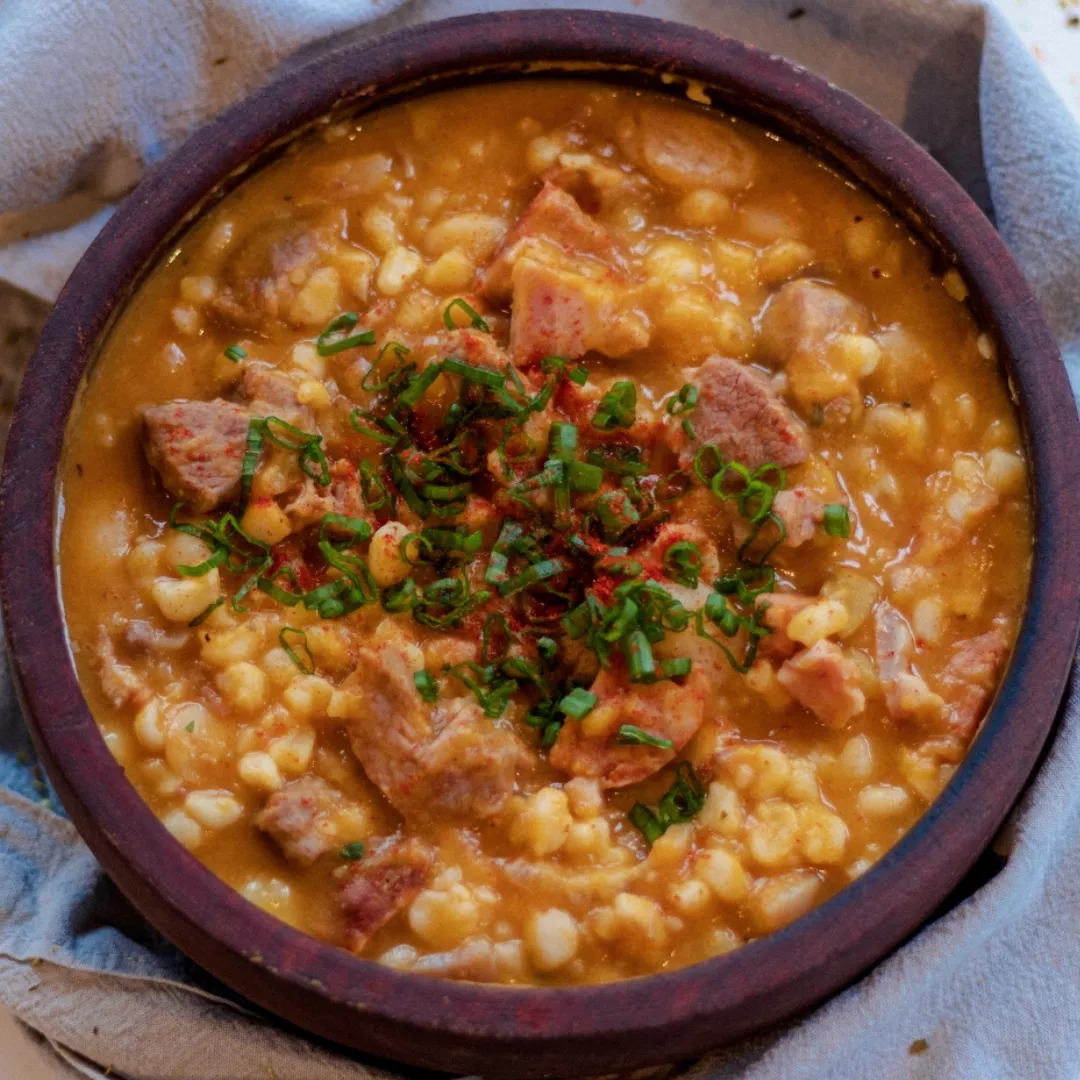
8. Locro (For National Holidays)
If you are studying in Argentina during the cooler months, you might get to taste Locro. This rich, hearty, slow-cooked stew is made from white corn, squash, beans, pork, and chorizo.
- When it’s served: It is traditionally prepared and eaten on national holidays like May 25th (Día de la Revolución) and July 9th (Día de la Independencia).
9. Polenta
A true cold-weather comfort food with deep Italian roots. Polenta is a smooth, warm cornmeal dish cooked with milk or broth, served steaming hot and generously covered in rich tomato bolognese sauce (tuco) and melted cheese. It’s the ultimate cozy meal after a chilly evening walk through Palermo.
10. Award-Winning Artisanal Gelato (Helado Artesanal)
You cannot talk about desserts in Argentina without mentioning gelato. Thanks to deep Italian roots, Buenos Aires is famous for having some of the best artisanal gelato in the world—and Argentines take it very seriously!
Unlike mass-produced ice cream, local heladerías craft their gelato fresh daily with ultra-creamy ingredients.
- Flavors to Try: You must order Dulce de Leche Granizado (caramel gelato with chocolate chips) or Sambayón.
- Pro Tip: Late-night gelato delivery (helado a domicilio) is a huge part of local culture. It is completely normal for students to order a kilo of gelato delivered straight to their apartment at midnight!
11. Dulce de Leche & Alfajores
No Argentine food list is complete without mentioning Dulce de Leche—a thick, silky, caramel-like milk spread that Argentines put on everything (pancakes, waffles, toast, and pastries).
Make sure to try an alfajor: two soft cookies sandwiched together with a generous layer of dulce de leche and coated in rich dark chocolate, white chocolate, or powdered sugar (alfajor de maizena).

🏆 Recognized Among the Best!
Love exploring local food cultures? We are thrilled to share that the Mente Argentina Blog has been featured by Feedspot as one of the Top Argentina Food Blogs!
🎓 Ready to Taste the Culture Yourself?
Studying abroad in Buenos Aires isn’t just about university credits; it’s about fully immersing yourself in a vibrant culture, mastering Spanish, and tasting incredible food every step of the way.
With Mente Argentina, we take care of your university enrollment, arrange top-tier housing in the best neighborhoods, and organize social activities so you can experience authentic Argentine culture from day one.
👉 Explore Mente Argentina Programs or Contact a Program Advisor today to start planning your culinary and academic adventure!