

You’ve just landed in Buenos Aires, checked into your beautiful apartment in Palermo or Recoleta, unpacked your bags, and spent your first few days exploring the city. But after a week of walking around under the Argentine sun, your clothes need a wash.
You look around your apartment, scan the kitchen, check the bathroom… and nothing. No washing machine. No dryer.
If you come from the US or northern Europe, where having an in-unit washer and dryer (or at least a massive basement laundry room) is the standard, this can feel like a major oversight. Did your host forget to list it? Is the apartment incomplete?
Don’t panic. You haven’t been cheated. You’ve just run into one of Buenos Aires’ most authentic—and surprisingly charming—cultural quirks. Here is the real reason why finding a washing machine in a porteño apartment is rare, and how locals actually get their clothes clean.
1. Historic Architecture vs. Modern Appliances
The first reason is structural. Buenos Aires is famous for its gorgeous, Parisian-style historic buildings. Many of the most charming apartments in the city were built in the early to mid-20th century.
When these buildings were designed, modern washing machines and heavy, power-hungry dryers simply weren’t a consideration in domestic architecture.
- Space is a premium: Kitchens and bathrooms in older buildings are designed for utility, leaving zero square footage or the necessary plumbing for bulky appliances.
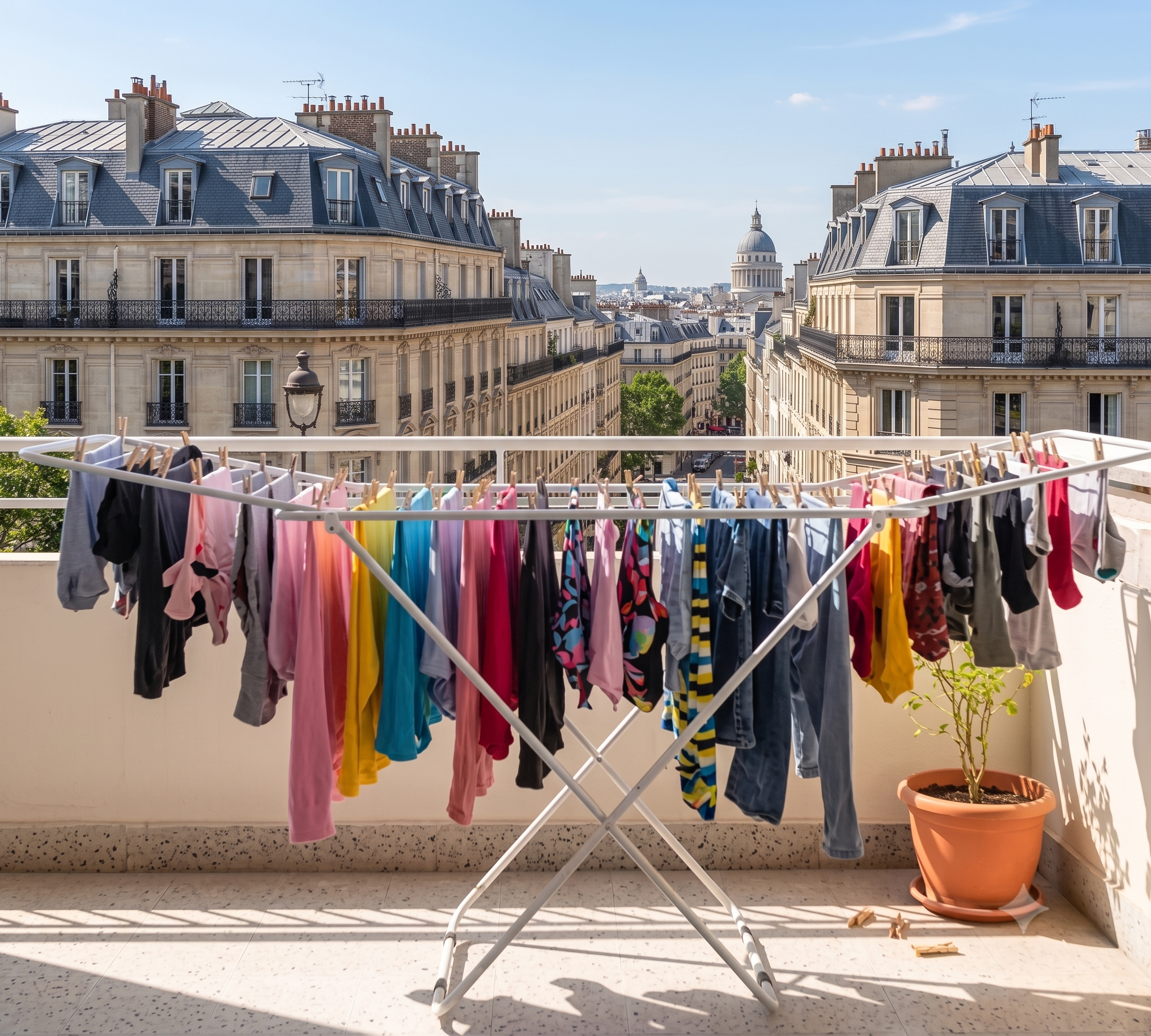
- The “Terraza” tradition: In traditional Argentine apartment buildings, laundry was meant to be done elsewhere. If you venture up to the very top floor, you’ll often find the lavadero and the terraza (rooftop)—a shared space with concrete sinks and long cordeles (clotheslines) where neighbors have dried their clothes under the Argentine sun for generations.
2. A Different Culture: Why Dryers are a Rarity
Even in apartments that do manage to squeeze in a small washing machine, you will almost never see a mechanical clothes dryer (secarropas).
Unlike in the US, where tossing clothes into a high-heat dryer is automatic, Argentina has a deeply ingrained air-drying culture. Electricity is expensive, spaces lack the heavy-duty external venting that dryers require, and culturally, people simply prefer the freshness of clothes dried naturally by the breeze. Step out onto any balcony in Buenos Aires, and you’ll see tenderos (folding drying racks) filled with clothes.
3. The Modern Exception: Buildings with a “Laundry”
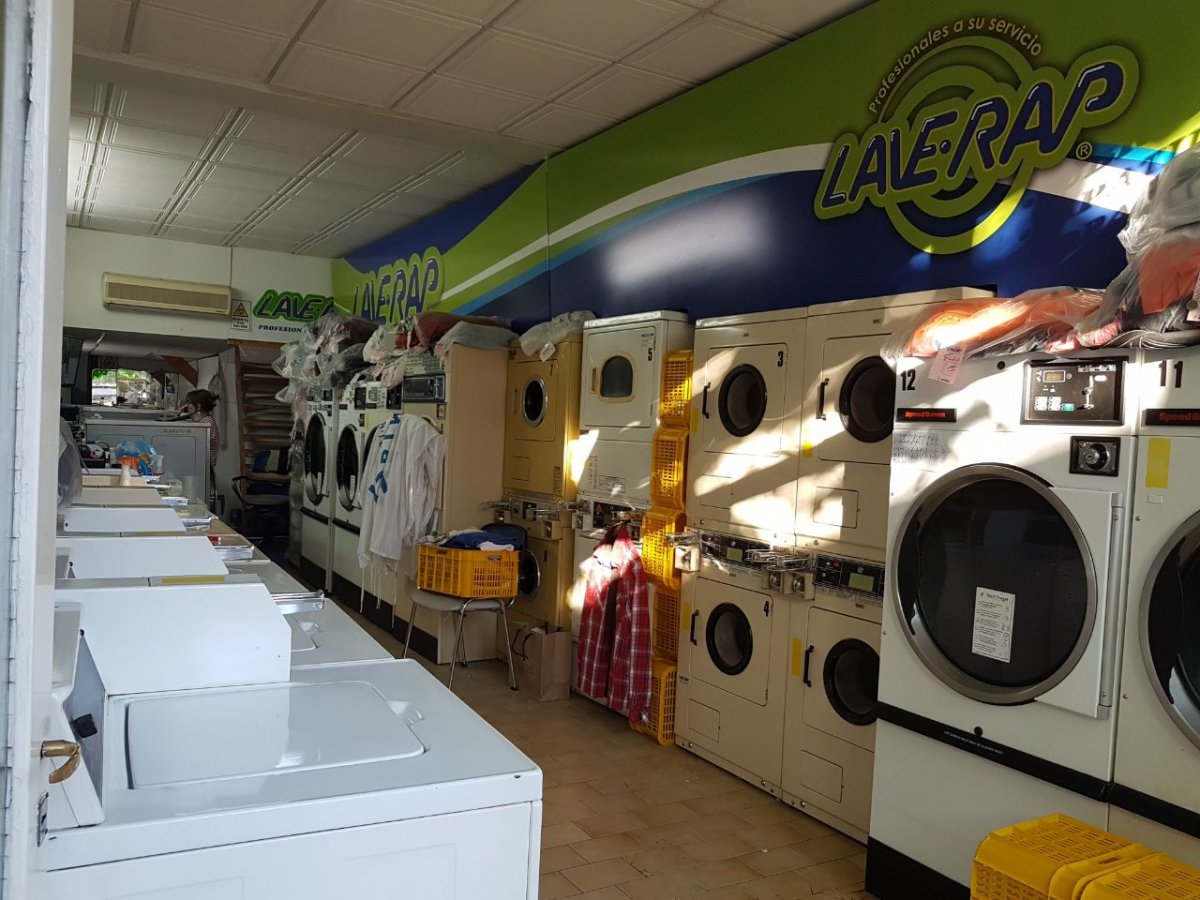
If you happen to stay in a newly constructed tower in areas like Palermo Soho or Belgrano, things look a bit different. These modern buildings often feature a dedicated Laundry Room—usually located in the basement or on the top floor next to the amenities—equipped with coin or token-operated commercial washers and dryers.
4. The Real Hero of the Neighborhood: The Lavandería
So, if older apartments don’t have machines and modern ones share them, what do most locals do? They head to the corner lavandería (laundromat).
Walk down almost any block in Buenos Aires, and you will spot at least one, if not two, tiny shops smelling heavily of lavender fabric softener. These are not self-service laundromats where you sit around reading a book for two hours.
In Argentina, the lavandería is a drop-off service. You walk in, hand over your bag of dirty clothes, and the staff weighs it by the canasta (basket). They wash, dry, and perfectly fold your clothes for you. You usually pick it up later that day or the next morning, wrapped beautifully in plastic, smelling amazing, and ironed better than you could ever do it yourself.
Best of all? Because of the current exchange rate, this service is incredibly affordable for international students and travelers. For the price of a coffee back home, you can get a week’s worth of laundry professionally cleaned.
The Bottom Line
Not having a washing machine in your apartment isn’t a downside—it’s an invitation to live like a local. It gets you out into the neighborhood, teaches you how to ask for a “canasta de ropa” in Spanish, and gives you a taste of the slower, community-focused pace of life in Buenos Aires.
Planning your immersion journey?
At Mente Argentina, we make sure you transition smoothly into your new porteño life. All our student housings and apartments are carefully selected, and our team is always ready to guide you to the best local spots—including the friendliest lavandería on your block!
👉 Explore Mente Argentina Programs & Housing Options
